What is reverse osmosis (RO)?
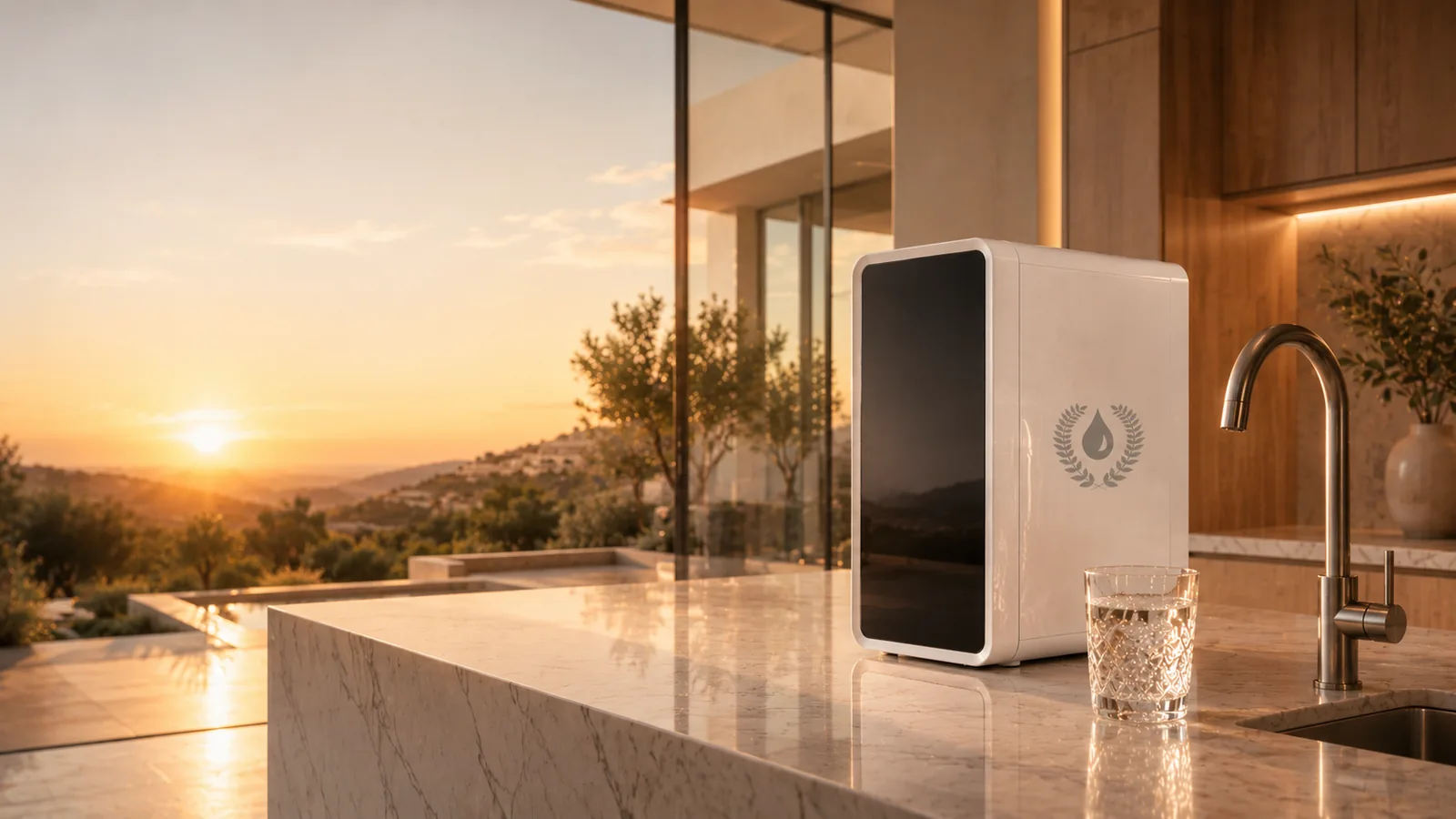
Reverse osmosis (RO, «فلتر آر أو») is a water-treatment approach that passes water through multiple stages, including a specialized membrane («ممبرين»). It is typically used in systems dedicated to drinking water.
How it differs from ordinary filtration
Conventional filters mostly capture sediment and particles and improve taste and odor through filter media. Reverse osmosis adds the membrane stage that sets it apart from simple filtration. In practical terms: ordinary filtration is a foundational step, while RO is a deeper stage aimed at drinking water.
Drinking-water use cases
When the main goal is improving kitchen drinking water, an RO system is often a candidate. RO systems come in different designs, with a tank or tankless.
When another solution may fit better
If your problem is limescale and hard water across the home, water softening (a «سوفتنر») or central filtration may fit better than focusing on drinking water alone. There is no one-size-fits-all answer; the choice depends on your problem and the test result.
Maintenance
Like any purification system, RO systems need their cartridges and membrane replaced on schedule to maintain performance. Always ask about the maintenance schedule before buying.
Is RO always better than other filters?
Not necessarily — the best system is the one that matches your problem. RO is usually aimed at drinking water, while other solutions address whole-home issues such as limescale.